



AUTUMN DOG CARE: MUDDY WALKS, DARK EVENINGS, FIREWORKS & EVERYTHING IN BETWEEN
Autumn with a dog is a funny old season.
The crisp mornings, crunchy leaves and quieter walks are lovely. The increasingly dark evenings, permanently damp towels and trail of muddy paw prints through the kitchen? Perhaps slightly less lovely.
Then there’s seasonal shedding, wet coats, fireworks and a whole new collection of interesting things appearing on the ground that your dog would very much like to eat.
So here’s our practical guide to navigating autumn with your dog — without turning every muddy walk into a military operation.
 |
WHAT’S THE BEST WAY TO CLEAN A MUDDY DOG AFTER A WALK?Some dogs seem capable of finding mud on a completely dry day. Come autumn, the rest don’t have to try quite so hard. For everyday muddy paws, legs and bellies, start simple: rinse with lukewarm water, towel dry thoroughly and brush out any remaining dried dirt once the coat is ready. If your dog is genuinely dirty, particularly smelly or has rolled in something we’d rather not discuss, that’s when a proper bath with a gentle dog shampoo earns its keep. And if autumn teaches you anything, it’s that a dedicated dog towel permanently stationed by the door is an excellent investment. |
WHY DOES MY DOG SMELL MORE WHEN THEY’RE WET?
Ah, eau de wet dog. One of autumn’s less celebrated seasonal scents.
A damp coat can make your dog’s normal skin and coat odours much more noticeable, particularly if they have a thick, long or curly coat that takes a while to dry.
A really good towel dry after wet walks can make a surprising difference. Pay particular attention to paws, legs, bellies and anywhere moisture tends to linger.
Regular brushing is useful too. It removes loose coat and dried dirt, helps prevent tangles in dogs prone to them and gives you a chance to notice any changes in your dog’s skin.
If you notice a new or unusually strong smell that persists, particularly with itching, redness, sore skin or ear problems, that’s different from ordinary wet-dog pong and worth a chat with your vet.
HOW SHOULD I LOOK AFTER MY DOG’S PAWS IN AUTUMN?
We tend to think about paws during hot summer weather or freezing winter conditions, but autumn can be surprisingly tough on them too.
Wet ground, mud, grit and increasingly cold surfaces all become part of everyday walks. A quick check when you get home lets you remove anything caught between the toes and spot small cuts, cracks or sore areas early.
After particularly wet walks, rinse away any stubborn mud and dry carefully between the toes as well as the paw pads.
A dog-friendly paw balm can also be useful for keeping pads conditioned as the weather becomes colder and wetter.
It only takes a minute — although your dog may behave as though you’ve requested a full medical examination.
WHY IS MY DOG SHEDDING MORE IN AUTUMN?
If you’re suddenly finding significantly more dog attached to your clothes, carpets and sofa, the changing season may be partly responsible.
Some dogs go through a noticeable autumn shed as their coat adjusts for the colder months, although exactly how much depends on breed, coat type and the individual dog.
Regular brushing helps remove loose hair before quite so much of it becomes part of your home décor. It’s also another good opportunity to check the skin underneath the coat.
Sudden or excessive hair loss, bald patches, persistent scratching or irritated skin isn’t something to put down automatically to the season, though. If something looks unusual for your dog, speak to your vet.
 |
WHAT CAN YOU DO WITH YOUR DOG WHEN IT WON’T STOP RAINING?There comes a point every autumn when even the most committed dog walker looks through the window and thinks, really? Dogs still need opportunities to use their brains even when the weather is horrible, but that doesn’t necessarily mean spending hours marching through horizontal rain. Scent games, searching for hidden treats, simple training exercises, food puzzles and enrichment games can all add something interesting to a quieter day. You don’t need specialist equipment, either. Cardboard boxes, rolled-up towels and things you already have around the house can become perfectly good dog entertainment. We’ve put together 7 free games to play with your dog for exactly those days — simple activities designed to get noses and brains working without requiring a living room full of expensive enrichment toys. A shorter sniffy walk plus some brain work at home can sometimes make for a very contented dog indeed. |
HOW CAN I KEEP MY DOG SAFE ON DARKER AUTUMN WALKS?
It happens remarkably quickly. One week your usual evening walk is in daylight; the next you’re wondering when somebody switched the lights off.
Autumn is a good time to check your dog’s collar, ID tag, lead and walking kit, and think about how visible you both are near roads.
Reflective or illuminated accessories can make dogs easier to see, particularly if they have a dark coat, and a torch can be useful even on familiar routes.
It’s also worth remembering that the things your dog is investigating haven’t disappeared just because you can no longer see them.
Which brings us neatly to…
WHAT SHOULD DOGS AVOID EATING ON AUTUMN WALKS?
Autumn produces an impressive buffet of things dogs absolutely do not need to sample.
Conkers and acorns are best kept out of mouths, while wild mushrooms and fungi are particularly difficult to identify reliably, so preventing your dog from eating them is the safest approach.
Fallen fruit can also become a problem, particularly once it begins to ferment or rot.
Then there are discarded foods, bones and other mysterious treasures that become considerably harder for you to spot as the evenings get darker.
You don’t need to turn a woodland walk into a hazard-assessment exercise. Keeping half an eye on what your dog is enthusiastically trying to eat is a pretty useful autumn habit.
If you think your dog has eaten something potentially harmful, contact your vet for advice rather than waiting for symptoms to appear.
HOW CAN I HELP MY DOG COPE WITH FIREWORKS?
For some dogs, the biggest challenge of autumn isn’t the weather at all.
Fireworks can be frightening and unpredictable. A dog who is worried by them may pant, pace, tremble, bark, hide, become unusually clingy or try to escape.
If you already know your dog struggles with fireworks, start preparing before the noisy evenings arrive.
Where possible, walk earlier while it’s still light and before fireworks are likely to begin. Once you’re home, closing windows and curtains can help reduce both noise and flashes, while television, radio or music can soften sudden sounds from outside.
Give your dog access to a familiar place where they feel secure and let them choose where they want to be.
Some dogs want to retreat somewhere quiet. Others want to be close to their person. You don’t need to ignore a frightened dog through fear of “rewarding” their anxiety — if they come to you for reassurance, it’s absolutely fine to be there for them.
And if your dog has significant noise fear or severe reactions to fireworks, speak to your vet before the main fireworks period. They can advise on appropriate support for your individual dog.

|
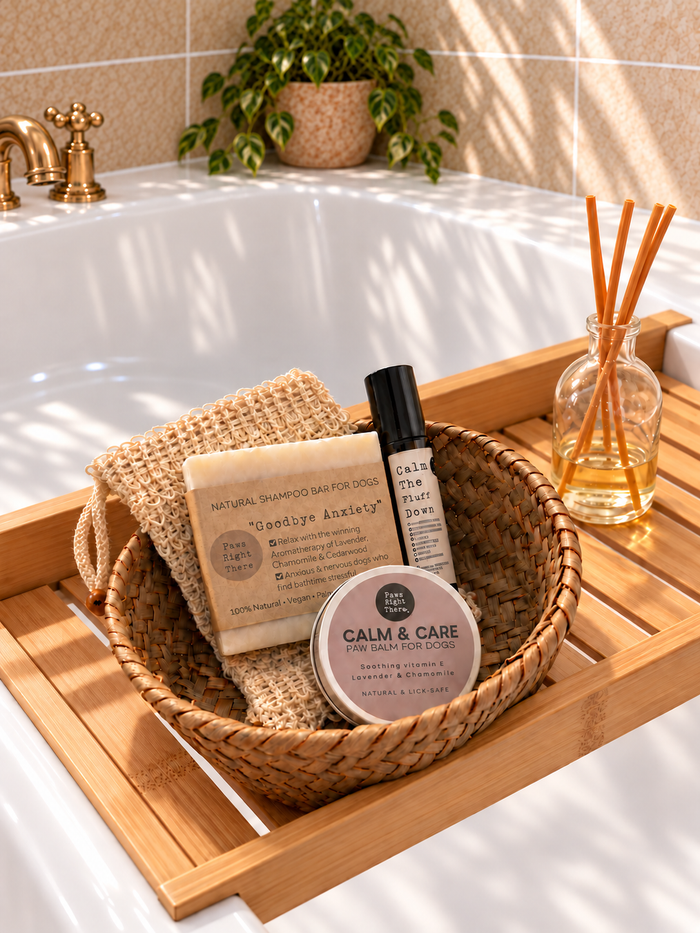
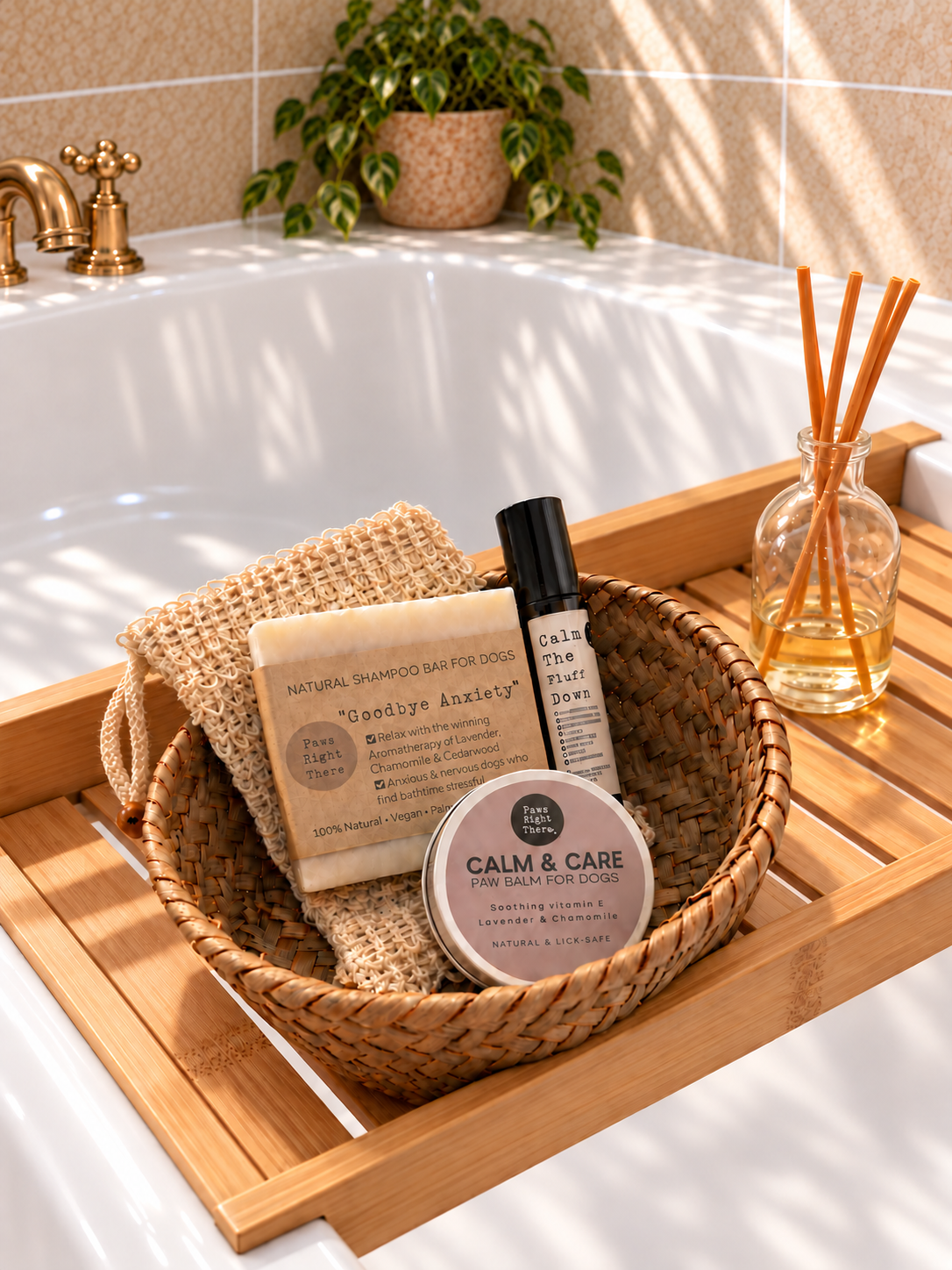
CAN A CALMING ROUTINE HELP A DOG DURING FIREWORKS SEASON?Familiarity can be useful for dogs who find changes, noise or busy evenings unsettling. Rather than suddenly introducing something new when the first firework goes bang, you can build familiar, quiet activities into your dog’s normal evening routine — perhaps a gentle brush, paw care, settling in their favourite spot or simply spending some quiet time together. Our Calming Collection was put together with those quieter routines in mind and includes: CALM THE FLUFF DOWN ROLL-ON SCENT CALM PAW BALM GOODBYE ANXIETY SHAMPOO BAR |
These products aren’t a treatment for fear or anxiety, and a scent or shampoo isn’t going to make a genuinely frightened dog suddenly forget about fireworks. However, think of them as part of the familiar rituals surrounding a calm evening — alongside a safe space, reduced noise, reassurance and whatever else helps your particular dog settle.
A LITTLE AUTUMN PREPARATION GOES A LONG WAY
Autumn dog care doesn’t need to involve an entirely new routine.
Keep a towel by the door. Rinse off the worst of the mud. Give paws a quick check. Brush out loose coat. Find a few indoor activities for truly miserable days. Dig out the reflective walking gear before you actually need it.
And if your dog finds fireworks difficult, start thinking about their routine before Bonfire Night rather than when the sky has already started exploding.
Because autumn with dogs may involve rather more mud, wet towels and suspicious woodland snacks than the beautiful leafy photographs suggest.
But then there are those crisp morning walks, noses buried in piles of leaves and evenings curled up together afterwards.
We’ll take the muddy paw prints.